


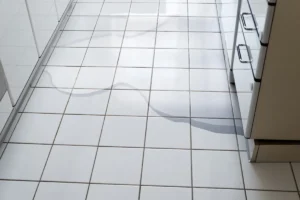
You head into the kitchen for your morning coffee and suddenly notice a puddle on the floor.
At first, you wonder if someone spilled a drink. Then you realize the water is coming from underneath your refrigerator.
Now what?
A leaking refrigerator is one of the most common appliance problems homeowners face. While some leaks have simple causes, others can signal a more serious issue that requires professional repair. Ignoring the problem can lead to damaged flooring, warped cabinets, mold growth, and even more expensive appliance repairs down the road.
Here’s why your refrigerator may be leaking water, and what you should check first.
Start by Finding Where the Water Is Coming From
Not all refrigerator leaks have the same cause. Before assuming the worst, take a few minutes to determine where the water is collecting.
The location of the water often provides the first clue about what’s causing the problem. For example, water underneath the vegetable drawers usually points to a different issue than water dripping onto the kitchen floor from behind the refrigerator.
So take the time to do some detective work. Is it:
- Under the front of the refrigerator?
- Behind the appliance?
- Inside the refrigerator compartment?
- Under the crisper drawers?
- Inside the freezer?
A Clogged Defrost Drain Is a Common Culprit
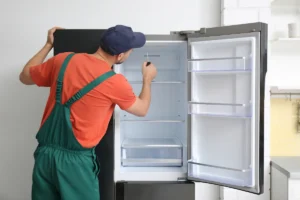
Most modern refrigerators automatically defrost themselves throughout the day. During each defrost cycle, melting frost drains through a small opening before collecting in a drain pan beneath the appliance, where it eventually evaporates.
Over time, however, food particles, ice, dust, or debris can clog that drain. When that happens, the water has nowhere to go.
Instead, it backs up inside the refrigerator or freezer before eventually leaking onto your floor.
Some of the most common signs of a clogged defrost drain include:
- Water under the crisper drawers
- Ice building up along the bottom of the freezer
- Small puddles appearing every few days
- Water leaking from the front of the refrigerator
The Water Supply Line May Be Leaking
If your refrigerator has an ice maker or water dispenser, it relies on a water supply line connected behind the appliance. Over time, those connections can loosen.
Plastic tubing may crack, fittings can wear out, or the line may become damaged if the refrigerator is moved during cleaning.
Even a slow drip can eventually soak flooring, damage drywall, and create ideal conditions for mold growth.
If it’s safe to do so, carefully pull the refrigerator away from the wall and inspect the water line for signs of moisture or dripping.
Your Drain Pan Could Be Damaged
Every refrigerator has a drain pan underneath it. Normally, you never notice it because the collected water evaporates before the pan fills.
However, older drain pans can crack or become misaligned over time. Instead of holding water, they allow it to spill directly onto your kitchen floor.
Fortunately, replacing a damaged drain pan is usually far less expensive than replacing the refrigerator itself.
Your Refrigerator May Not Be Level
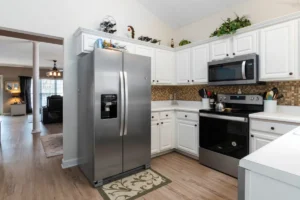
Believe it or not, your refrigerator is designed to sit with a very slight backward tilt.
That small angle helps the doors close properly while allowing water to drain correctly during automatic defrost cycles. If the appliance leans forward, water may collect where it shouldn’t before eventually spilling onto the floor.
If your refrigerator rocks when you push on it or the doors don’t close completely on their own, adjusting the leveling feet may solve the problem.
Ice Maker Problems Can Cause Hidden Leaks
Ice makers contain several components that can eventually wear out. A cracked fill tube, faulty water inlet valve, or damaged ice maker assembly can all allow water to escape before it reaches the ice tray.
Many homeowners first notice sheets of ice forming inside the freezer or puddles appearing near the front of the refrigerator every morning.
If your ice production has also decreased, the ice maker could be the source of the leak.
Worn Door Seals Can Create Excess Moisture
Sometimes your refrigerator isn’t technically leaking at all. Instead, warm, humid air enters through a damaged door gasket and creates heavy condensation inside the refrigerator.
Eventually, that moisture drips onto shelves or the floor.
Take a close look at the rubber seal around each door. If it’s cracked, torn, loose, or covered in debris, it may no longer create an airtight seal. Replacing a worn gasket often improves cooling efficiency while eliminating excess moisture.
When Should You Call for Refrigerator Repair?
Some refrigerator leaks are easy to fix. Others require professional diagnosis.
If you’ve checked the drain, inspected the water line, cleaned the door gasket, and your refrigerator continues leaking, it’s time to schedule service.
Professional repair is also recommended if:
- Water keeps returning after you’ve cleaned everything.
- The refrigerator isn’t cooling properly.
- The leak appears to come from inside the cabinet.
- The ice maker has stopped working.
- Water is collecting beneath the appliance every day.
Modern refrigerators contain sealed cooling systems, electrical components, and water connections that often require specialized tools to diagnose properly. This isn’t one you should DIY; trying to guess at the problem can sometimes lead to replacing parts that weren’t actually causing the leak.
Stop Small Leaks Before They Become Big Repairs
A small puddle today can turn into damaged flooring, swollen cabinets, or mold tomorrow.
If your refrigerator is leaking water, don’t keep throwing towels on the floor and hoping the problem goes away. Whether it’s a clogged defrost drain, damaged water line, faulty ice maker, or another mechanical issue, catching the problem early usually leads to a simpler (and less expensive) repair.
At Mustang Appliance Repair, we provide fast, dependable refrigerator repair for homeowners throughout Mustang and the surrounding communities. Our experienced technicians can quickly identify the source of the leak, explain your repair options, and get your refrigerator back to working properly.
Contact Mustang Appliance Repair today to schedule your refrigerator repair before a small leak becomes a much bigger headache.