


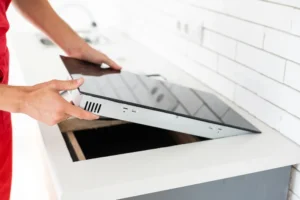
Your plan for dinner comes to a screeching halt the moment a burner on your cooktop refuses to light. Whether it’s the endless clicking of a gas igniter or the cold, dark surface of an electric coil, a broken cooktop is a major kitchen disruption.
Before you start looking up takeout menus and pricing new appliances, you should know that many common cooktop repair issues are surprisingly straightforward. We’ll explore the typical problems for both gas and electric cooktops so you can figure out what’s wrong and how to fix it.
Your Electric Cooktop Won’t Heat Up
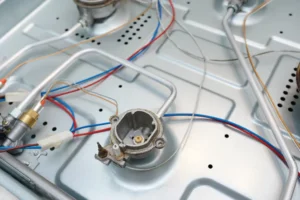
When an electric burner stays cold, the problem is usually isolated to that specific burner. It’s rare for the entire unit to fail at once unless there’s a major electrical issue.
The most frequent culprit is a bad heating element or coil. Over time, these can burn out or develop a short. On many older models with coil burners, you can test this easily.
First, make sure the cooktop is completely cool. Then, unplug the faulty coil and swap it with a working one from another burner. If the previously broken coil works in the new spot, your problem isn’t the coil itself, but the socket it plugs into. If the coil still doesn’t heat up, you’ve found your problem: a dead element. Luckily, replacements are easy to find and just plug right in.
For glass or ceramic smooth-top cooktops, the logic is similar, but the parts are hidden and may be harder to access.
For instance, a burner that won’t heat might have a burnt-out ribbon element beneath the glass. You might also have a faulty infinite switch, which is the dial you turn to control the temperature. If the “hot surface” indicator light stays on long after the cooktop is cool, that’s often a sign the switch has failed. Replacing these parts tends to be more involved and usually requires a professional.
Clicking Coming from Your Gas Cooktop
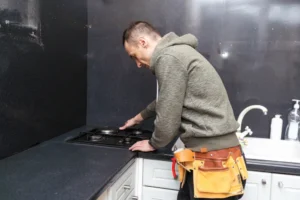
A gas cooktop that clicks but never ignites is a classic kitchen frustration. That clicking sound is the spark from the igniter trying to light the gas. If there’s no flame, you have an issue with either the spark or the gas flow.
Start with the simplest fix: cleaning. Food debris, grease, and boilovers are the number one enemy of a gas cooktop. A clogged burner cap or port can block the flow of gas, so there’s nothing for the spark to ignite.
To address this, remove the burner cap and grate (when cool) and scrub them with a stiff brush and warm, soapy water. Use a paperclip or a small pin to carefully clear out each of the small gas ports around the burner head.
If cleaning doesn’t help, inspect the igniter itself. It’s the little white ceramic nub next to the burner. If it’s cracked, covered in grime, or misaligned, it won’t produce a strong enough spark in the right place. You can gently clean it with a toothbrush. If you notice a weak, yellow spark instead of a bright blue-white one, the ignition module might be failing.
One Burner Works, But Others Don’t
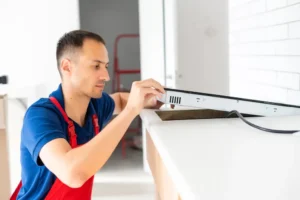
When one electric coil is out, it’s a simple fix. But what if multiple burners stop working?
On an electric cooktop, this could point to a more significant wiring issue or a problem with the main terminal block where power enters the appliance. This isn’t a typical DIY fix, as it involves working with your home’s high-voltage electrical connections.
On a gas cooktop, if all the burners click but none will light, the issue is likely a problem with the main gas supply to the appliance. Check to see if other gas appliances in your home, like your furnace or water heater, are working.
If they aren’t, you may have an issue with the gas line coming into your house. If other appliances are fine, the problem is isolated to the cooktop’s internal gas regulator or supply line. Working with gas lines is dangerous, so this is a clear signal to call a professional for cooktop repair.
Why Your Glass Cooktop Has Scratches and Cracks
Glass and ceramic cooktops look sleek, but they require a bit of care. Scratches are usually cosmetic and caused by dragging rough-bottomed pots and pans (like cast iron) across the surface. Using cookware with a smooth, flat bottom can prevent this, while existing minor scratches can sometimes be buffed out with a specialty cleaning paste.
A crack, however, is a serious safety hazard and can be caused by dropping a heavy object onto the surface or by thermal shock, which occurs when a very hot pan is placed on a cool cooktop or vice versa. A cracked glass surface compromises the insulation and exposes the heating elements below to spills, which can cause electrical shorts and risk of shock. You should stop using a cracked cooktop immediately. Unfortunately, repairing the glass is not an option; the entire glass-ceramic surface needs to be replaced.
When to Bring in a Professional for Cooktop Repair
You can easily clean a burner or swap a plug-in electric coil. But if the problem involves disassembling a smooth-top unit, testing electrical switches with a multimeter, or diagnosing a gas supply issue, it’s time to put down the tools.
An incorrect repair can lead to further damage, gas leaks, or electrical hazards, but a professional technician has the diagnostic equipment and experience to find the root cause safely and efficiently. They can tell you whether a simple part replacement will solve the problem or if a more significant issue is at play.
Don’t let a faulty burner ruin your dinner plans. If you’re in the Mustang area and are dealing with a cooktop that just won’t cooperate, contact Mustang Appliance Repair. We’ll get your kitchen back in working order quickly and safely.