


You unload the dishwasher expecting sparkling glasses and spotless dinner plates. Instead, you find cereal still glued to the bowls, lipstick marks on coffee mugs, and forks that somehow came out dirtier than they went in.
If your dishwasher’s not cleaning dishes, don’t assume the appliance has reached the end of its life. In many cases, the problem is something relatively simple. Catch it early, and you may be able to avoid a more expensive dishwasher repair later.
Here are some of the most common reasons your dishwasher isn’t doing its job.
Your Spray Arms Are Clogged
One of the biggest culprits is a dishwasher spray arm clogged with food particles, grease, or hard water deposits. The spray arms are responsible for blasting hot water throughout the dishwasher. As they spin, water shoots through dozens of tiny holes designed to reach every plate, bowl, glass, and utensil.
Over time, those little openings can become blocked. Imagine trying to water your lawn with a garden hose that has half the nozzle plugged with mud. Instead of a strong spray, you get a weak trickle.
The same thing happens inside your dishwasher. If only a few holes are clogged, you might notice the dishes on one rack come out clean while the others don’t. If most of the spray arm is blocked, the entire load suffers.
Fortunately, spray arms can often be removed and cleaned with warm water and a small brush or toothpick. Just avoid using anything sharp enough to enlarge the holes, since that can affect water pressure.
You’re Overloading the Dishwasher
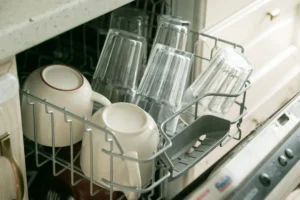
It’s tempting to squeeze in “just one more plate.” Then another. And maybe a cutting board balanced sideways because it’ll probably fit.
Except now the spray arms can’t rotate freely.
Even if they can spin, the water can’t reach every surface because the dishes are blocking one another. Instead of washing away food, the spray bounces off one pan and never reaches the glass hiding behind it.
Large cookie sheets, oversized mixing bowls, and casserole dishes are common offenders. They create walls that keep water from circulating properly. Loading efficiently almost always produces better results than loading as much as possible.
The Filter Is Full of Gunk
Many newer dishwashers have removable filters at the bottom of the tub. They’re designed to catch food particles before they recirculate through the wash cycle.
Eventually, though, those trapped food scraps build up. A dirty filter restricts water flow and allows debris to circulate throughout the machine. Instead of washing your dishes, the dishwasher starts spraying tiny food particles back onto them.
If you’ve ever found bits of rice, spinach, or coffee grounds stuck to otherwise clean dishes, the filter deserves a closer look.
Most manufacturers recommend cleaning the filter every month, though busy households may need to do it more often.
Hard Water Is Leaving Mineral Deposits Behind
Oklahoma is no stranger to hard water. Over time, minerals like calcium and magnesium build up inside your dishwasher. Those deposits collect on spray arms, heating elements, filters, and even your dishes themselves.
You may notice:
- White spots on glasses
- Cloudy dishes that never seem completely clean
- Chalky residue on silverware
- Reduced water pressure inside the dishwasher
- Soap that doesn’t dissolve completely
Running a dishwasher cleaner designed to remove mineral buildup can often improve performance. In homes with especially hard water, installing a water softener may help protect your appliances over the long term.
You’re Using Too Much Detergent
More soap doesn’t automatically mean cleaner dishes. In fact, using too much detergent often creates the opposite problem.
Excess detergent leaves behind a sticky film that traps food particles and mineral deposits. Instead of rinsing away cleanly, residue builds up on plates, bowls, and the inside of the dishwasher itself. If you’re using detergent pods, avoid adding extra powder or liquid unless your manufacturer specifically recommends it. Following the recommended amount usually delivers the best results and is an incredibly quick fix for this problem!
The Water Isn’t Hot Enough
Dishwashers depend on hot water to dissolve detergent and break down grease. If the incoming water isn’t hot enough, cheese, butter, cooking oils, and baked-on food become much harder to remove.
Most dishwashers perform best when the water entering the appliance is around 120 degrees Fahrenheit. An easy trick is to run the hot water at your kitchen sink for a minute before starting the dishwasher. That way, the first water entering the machine is already hot instead of sitting cold inside the plumbing.
If every load comes out greasy despite proper loading and detergent use, your water heater or the dishwasher’s heating element could be the issue.
Something More Serious Could Be Going On
Sometimes the problem goes beyond basic maintenance. For example:
- Failing circulation pumps may not generate enough water pressure.
- Worn water inlet valves might not allow enough water into the machine.
- Damaged wash motors may prevent the spray arms from spinning properly.
Even electronic control boards can develop problems that interrupt normal wash cycles.
These issues usually require professional dishwasher repair, since diagnosing them involves electrical testing and disassembling parts of the appliance.
When Should You Call for Dishwasher Repair?
If you’ve cleaned the filter, checked for a dishwasher spray arm clogged with debris, loaded the dishwasher correctly, and verified you’re using hot water, but your dishes still come out dirty, it’s time to have the appliance inspected.
The longer a dishwasher operates with a failing pump or motor, the harder the remaining components have to work. What begins as poor cleaning performance can eventually lead to leaks, complete wash cycle failures, or a dishwasher that won’t start at all. A professional technician can identify the problem before it turns into a much larger repair.
Get Your Dishwasher Working Like New Again
Nobody wants to wash every dish by hand after paying for a dishwasher.
If your dishwasher’s not cleaning dishes, don’t keep rerunning the same load and hoping for a different outcome. Whether the issue is a dishwasher spray arm clogged with buildup, a failing pump, or another mechanical problem, getting the right diagnosis can save both time and money.
At Mustang Appliance Repair, we provide fast, reliable dishwasher repair throughout Mustang and the surrounding communities. Our experienced technicians can quickly identify the cause of the problem, explain your repair options, and get your dishwasher back to cleaning the way it should.
Give Mustang Appliance Repair a call today and let us help you get spotless dishes back on your table.