



Your top load washer is sitting completely still with a tub full of soaking wet clothes, leaving you with an unexpected and frustrating laundry disaster.
You need a fast solution to get your routine back on track. Top load washers rely on a few specific mechanical parts to move water and spin clothes. When those parts fail, you can often pinpoint the exact problem with a quick visual inspection and a basic understanding of how the machine works.
Grab your toolbox if you’re interested in learning more about top load washing machine repair.We are going to look at the most common top load washer malfunctions and exactly how you can address them right now.
The Washer Refuses to Drain Water

Opening the lid to find a pool of dirty, soapy water means your machine failed to complete its drain cycle. You usually have a simple blockage or a faulty lid switch causing this exact issue.
First, check the lid switch assembly. Top load washers rely on a small plastic switch under the lid rim to signal that the door is safely closed. If that switch breaks off or stops clicking when you press it down, the washer refuses to drain as a safety precaution. You can order a replacement switch online for a few dollars, unscrew the broken component, and plug the new wiring harness directly into the same slot.
Next, inspect the drain hose and the water pump. Small items consistently escape from pockets and bypass the tub filter. A single baby sock, a thick clump of pet hair, or a loose coin can slide down into the water pump and completely block the impeller blades.
You’ll need to pull the washer away from the wall, disconnect the power, and remove the back panel. Pinch the clamp on the black rubber drain hose to detach it from the pump. Keep a bucket handy to catch the trapped water. Pull out the clog with a pair of pliers, reattach the hose, and run a test cycle.
The Tub Will Not Agitate or Spin
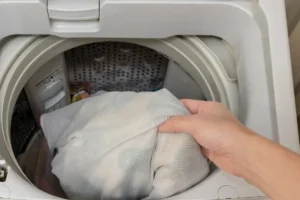
You hear the motor humming loudly, but the center agitator sits completely motionless. This issue usually points to a broken drive belt or stripped agitator directional cogs.
The drive belt sits underneath the machine, connecting the main drive motor to the transmission. Over time, these thick rubber belts dry out, crack, and snap in half. Tip the washer backward against the wall and look underneath. If you see a shredded black rubber belt lying on the floor, you found your culprit. Slipping a new belt over the pulleys takes five minutes and gets the tub spinning again immediately.
If the tub spins but the center post refuses to agitate the clothes, look at your agitator directional cogs. These small plastic teeth sit inside the top half of the agitator post. They grip the plastic ridges to force the post back and forth.
Heavy loads of denim jeans or thick bath towels put immense strain on these plastic teeth until they wear completely smooth. Pop the cap off the top of the agitator, pull out the inner plastic housing, and dump out the worn cogs. Slide a fresh set of cogs into the slots to restore the aggressive washing motion you need to get clothes truly clean.
The Machine Shakes Violently on the Spin Cycle

A washer banging loudly against the dryer or walking across the laundry room floor creates a massive disturbance in your home, and this intense vibration almost always stems from an unbalanced load or uneven leveling legs.
Always check your load distribution first. Throwing a single heavy king-sized comforter into the tub forces all the water weight to one side of the drum. The machine spins up to high speeds, and that uneven weight violently throws the entire tub off its center axis.
To resolve the issue, stop the cycle, pull the heavy item out, and redistribute the fabric evenly around the center post. Adding a few extra towels on the opposite side helps perfectly balance heavy blankets, for example.
If the machine shakes during every load, check the leveling legs resting on the floor. Grab the top of the washer and try to rock it back and forth. If the machine wobbles even slightly, the legs need adjusting. Use a wrench to loosen the locking nut on the front legs. Turn the metal leg counterclockwise to lower it down until it sits firmly against the tile or linoleum. Tighten the locking nut back up against the frame to keep the leg permanently in place.
Call the Experts for Complicated Top Load Washing Machine Repairs
Some washing machine problems require a trained eye, specialized diagnostic tools, and years of hands-on experience. Diagnosing a failing transmission, replacing a burned-out main control board, or rewiring a short-circuited motor falls well outside basic DIY maintenance. Tinkering with complex electrical components often leads to bigger headaches or completely destroys the appliance, meaning it’s not worth the cost trying to DIY.
When you hit a roadblock and need your washer running perfectly today, reach out to Mustang Appliance Repair. Our experienced technicians pinpoint exact mechanical failures, carry the right replacement parts directly in their trucks, and restore your laundry routine quickly.