


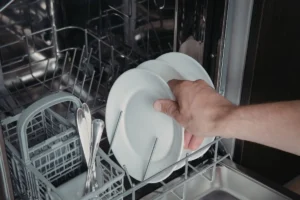
You unload the dishwasher expecting clean plates and sparkling glasses, only to find everything covered in a cloudy white film.
The dishes are technically clean. They just don’t look like it.
White residue on dishes usually comes from minerals, detergent, or a combination of both. In Mustang and much of Oklahoma, hard water can make the problem especially noticeable because dissolved calcium and magnesium get left behind as water dries.
Sometimes the fix is as simple as changing how much detergent you use. Other times, the buildup points to a water-temperature problem, clogged spray arms, or an issue with the dishwasher itself.
Here’s how to narrow it down.
Hard Water Is One of the Most Common Causes
If the white film feels chalky or powdery, hard water is a strong possibility.
Hard water contains dissolved minerals that stay behind after the water evaporates. Over time, those minerals can show up as cloudy glasses, white spots on silverware, or a dull coating across plates and bowls. You may also notice similar buildup around faucets, showerheads, or sinks.
Inside the dishwasher, those same minerals can collect on heating elements, spray arms, filters, and other components. That means the white film on your dishes may be only the most visible part of the problem.
You May Be Using Too Much Detergent

More detergent doesn’t always mean cleaner dishes. Modern dishwashers use less water than older models, so pouring in the same amount of detergent you used 15 years ago can leave residue behind.
That’s especially true if you have soft or moderately soft water. Excess detergent may leave dishes feeling cloudy, gritty, or slightly slick after the cycle ends.
Try reducing the amount you use and make sure you’re following the detergent manufacturer’s recommendations for both your dishwasher and water conditions. If you use pods, switching temporarily to powder or liquid detergent can also help you experiment with smaller amounts.
The Detergent May Not Be Dissolving Completely
Sometimes the problem isn’t how much detergent you use, but whether the dishwasher is dissolving it properly.
If the water isn’t hot enough, detergent may not fully break down during the wash cycle. You might find:
- White residue on dishes
- Undissolved detergent in the dispenser
- Powder collecting in the bottom of the tub
- Cloudy glassware
- Greasy dishes along with the white film
Run the hot water at the kitchen sink for a few seconds before starting the dishwasher so hot water reaches the appliance sooner. If the dishwasher still seems to be washing with lukewarm water, there may be a problem with the heating element, thermostat, or another internal component.
Rinse Aid Can Make a Big Difference

Rinse aid helps water slide off dishes instead of drying in droplets. Every little droplet can leave minerals behind when it evaporates.
If your rinse-aid dispenser is empty, you may start seeing more spotting and cloudy residue, especially on glasses. Refill the dispenser and make sure it’s releasing properly during the cycle.
Many dishwashers also allow you to adjust how much rinse aid is dispensed. If you have especially hard water, increasing the setting slightly may improve results.
Your Spray Arms Could Be Clogged
Dishwasher spray arms contain small openings that direct water across the racks. Mineral deposits and food debris can clog those openings over time, reducing water pressure and preventing detergent from rinsing away completely.
Take a look at the spray-arm holes. If you see visible buildup, clean them according to the manufacturer’s instructions. Make sure the arms also spin freely and aren’t being blocked by tall plates, pans, or utensils. Poor water circulation can leave some dishes clean while others come out coated in residue.
A Dirty Filter Can Affect Rinsing
Your dishwasher filter catches food particles before they circulate back through the machine. If that filter becomes clogged, dirty water may not move through the dishwasher properly.
That can contribute to cloudy dishes, food residue, unpleasant smells, and poor overall cleaning performance.
Remove and clean the filter regularly, especially if you run the dishwasher frequently. If you haven’t cleaned it in a while, you may be surprised by what’s living down there.
Check Your Water Temperature

Dishwasher performance depends heavily on water temperature. Water that’s too cool may not dissolve detergent properly or remove grease effectively. Water that’s excessively hot can create its own problems, especially for delicate glassware.
Most dishwashers work best with hot water around the temperature recommended by the appliance manufacturer. If you notice consistently poor cleaning, greasy dishes, or undissolved detergent along with the white film, water temperature is worth checking. A dishwasher that can’t heat water properly may need professional repair.
Is the White Film Actually Etching?
Not every cloudy glass can be fixed. Sometimes what looks like mineral residue is actually permanent glass etching.
Etching happens when dishwasher detergent, high water temperatures, or very soft water gradually damage the surface of glassware.
Here’s a quick way to tell the difference: try rubbing a cloudy glass with white vinegar. If the film disappears, minerals were probably responsible.
If the cloudiness remains, the glass itself may be etched. Unfortunately, etched glass usually can’t be restored. You can, however, prevent further damage by using less detergent, adjusting water temperature, and choosing a gentler dishwasher cycle when appropriate.
When Does White Film Mean Your Dishwasher Needs Repair?
White residue alone doesn’t automatically mean something is broken.
Start with the easy adjustments: Clean the filter and spray arms. Refill the rinse aid. Experiment with detergent amounts. Make sure the dishwasher is getting sufficiently hot water.
Then run another cycle. If the film keeps returning and you’re also noticing weak water pressure, poor cleaning, cold water, detergent that won’t dissolve, or unusual noises, an internal component may be causing the problem.
A technician can inspect the heating system, spray assembly, water inlet components, circulation pump, and other parts that affect how well the dishwasher washes and rinses.
Get Your Dishwasher Back to Actually Cleaning the Dishes
You shouldn’t have to wash your dishes again after the dishwasher finishes washing them.
If hard water or detergent buildup is causing the white film, a few maintenance changes may solve the problem. If cleaning the filter, adjusting detergent, and using rinse aid don’t help, however, the dishwasher may not be circulating, heating, or rinsing water correctly.
Mustang Appliance Repair can help diagnose the problem and determine whether your dishwasher needs maintenance or professional repair.
Contact Mustang Appliance Repair to schedule service and get your dishes coming out clean instead of looking like they spent the cycle rolling around in sidewalk chalk.